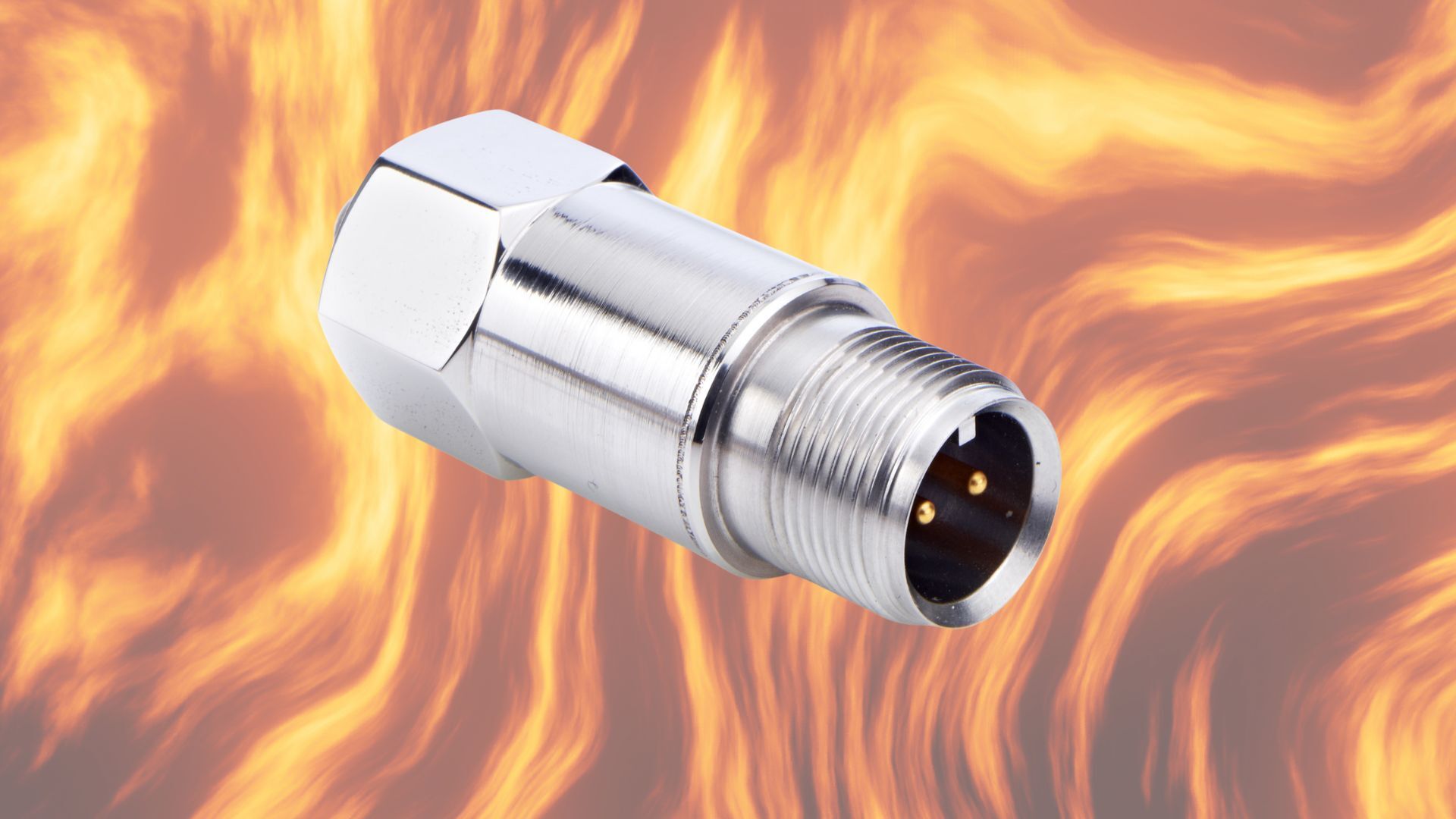
Ceramic harsh-environment sensors play a vital role in monitoring vibration, pressure, and other critical parameters in demanding industrial applications. Their ability to perform reliably under high temperatures, intense vibration, mechanical stress, and chemically aggressive conditions makes them indispensable across power generation, rotating machinery, and process industries.

This article explores how ceramic-based sensing technology works and why it is so well suited to high-performance, safety-critical environments.
What Are Ceramic Sensors?
Ceramic sensors use advanced ceramic elements—most commonly piezoelectric or piezoresistive ceramics, to measure physical parameters. Typical measurements include:
-
Vibration – for detecting bearing wear, shaft instability, and absolute vibration in rotating machinery
-
Temperature – suitable for extremely high-temperature environments such as turbines and furnaces
-
Pressure – used in hydraulic systems, industrial processes, and power plant control
-
Gas concentration – including oxygen, CO, and hydrocarbons
-
Humidity – for environmental and industrial moisture monitoring
Ceramic sensing elements are highly stable, chemically inert, and mechanically robust. This makes them ideal where conventional oil-filled or polymer-based sensors may degrade, drift, or fail over time.
Why Ceramics Are Ideal for Harsh Environments?
Advanced ceramic materials such as alumina, zirconia, and silicon nitride offer a combination of properties that are difficult to match:
-
High thermal stability, with operating capabilities approaching 1000°C depending on design
-
Excellent chemical resistance, suitable for oil & gas, chemical processing, and marine environments
-
High mechanical strength, allowing operation under severe vibration, shock, and pressure
-
Electrical insulation, improving signal stability in electrically noisy industrial settings
-
Many ceramic sensors are also non-oil-filled, eliminating leakage risks and improving long-term reliability in extreme conditions.
Industrial Ceramic Vibration Sensors: The Shear-Mode Advantage
A key example of ceramic harsh-environment technology is the shear-mode piezoelectric accelerometer, widely used for industrial vibration monitoring.
The Sensonics PZS accelerometer is representative of this design. It uses a high-performance shear-mode piezoelectric ceramic assembly, inherently resistant to thermal transients and base-strain effects. The sensor is housed in a hermetically sealed stainless-steel enclosure, available in top-exit or side-exit configurations to suit installation requirements.
Mounted on bearing housings of turbines, compressors, motors, and pumps, the PZS accelerometer provides accurate absolute vibration measurement and early detection of bearing wear and mechanical faults.
Why shear-mode ceramic designs excel?
Shear-mode piezoelectric elements isolate the sensing crystal from mounting stresses and thermal shock, delivering:
-
More stable measurements
-
Improved rejection of base strain
-
Strong immunity to rapid temperature changes
-
Higher accuracy in vibration-intensive environments
For this reason, shear-mode ceramic accelerometers are the preferred choice in power generation, nuclear, and oil & gas applications.
Internal Design for Electrical and Thermal Stability
Within the PZS accelerometer, the ceramic sensing element and amplifier are housed inside an inner metal enclosure that is electrically and thermally insulated from the outer body and connected to 0 V as an internal screen. This design:
-
Protects against earth loops
-
Suppresses electrical interference
-
Improves accuracy in electrically noisy environments
-
Enhances stability under fluctuating temperatures
-
Current-Loop Operation for Long Cable Runs
By combining shear-mode ceramic sensing, hermetic construction, and current-loop operation, ceramic harsh-environment sensors deliver robust, accurate, and reliable monitoring in applications where failure is not an option.
For more information on ceramic sensors, turbine supervisory systems, and advanced condition monitoring solutions, speak to a Sensonics expert today.